Wednesday, May 1, 2013

Work Trends in Japan

Looking at the trends in Japan, a country (and people) known for their work ethic will help give us insights as to where our workforce trends will lean to.
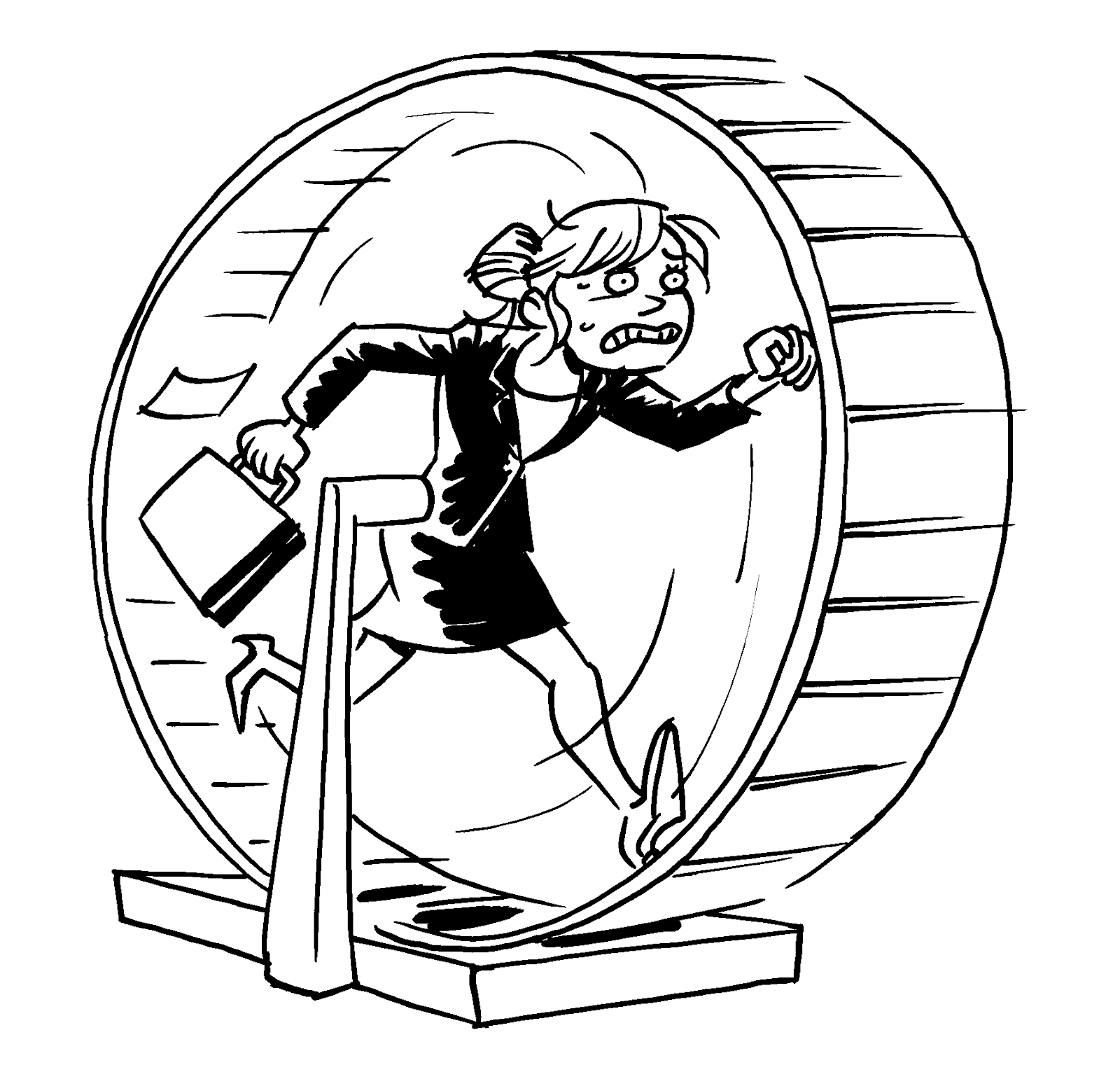
Japan has always been known for it work ethics. Death from too much work is so commonplace in Japan that there is a word for it -- karoshi. But in past years, the economic crisis that we feel has spread world wide.


For decades, the Japanese government has been trying, and largely failing, to set limits on work and on overtime. The problem of karoshi became prevalent enough to warrant its own word in the boom years of the late 1970s, as the number of Japanese men working more than 60 hours a week soared.

The consequences show up not only in claims for death and disability from overwork but in suicides attributed to "fatigue from work." Among 2,207 work-related suicides in 2007, the most common reason (672 suicides) was overwork, according to government figures released in June 2007.

Unpaid overtime is routine in factories and offices across Japan.

At Toyota, it had been built into factory life -- in the form of long, after-hours quality-control sessions that were supposedly voluntary -- and was considered a key to the company's success. Participation in the sessions, though, often figured in a worker's prospects for promotion and higher pay.

The labor ministry cites 80 hours overtime a month as the point at which a worker’s health and well-being become compromised. Anything above that and the chance of karoshi (death from overwork) becomes more probable.


Tokyo Shimbun found that of the 100 companies surveyed, 70 have agreements stipulating maximum overtime of more than 80 hours a month. The average is 92 hours. The most is for the printing company Dai-Nihon Insatsu, where employees can be asked to work up to 200 hours overtime a month.

In second place is Kansai Power Company, with 193 hours. The ministry, alarmed by this trend, revised the Labor Standards Law in April 2010 and implemented a new pay system for overtime work in a bid to check the rise in hours, but it didn’t work. Thirteen of the companies surveyed have increased the number of allowable overtime hours since then. Only Hino Motors has reduced them.

YOUNG PEOPLE AND WORK IN JAPAN: 

FREETERS AND NEET

Freeters (derived from the English word “free” and the German word for worker Arbeiter) is a term used to describe young part time workers. Comparable in many ways to Generation X slackers, they like to hang out and pursue interests like snowboarding and surfing, work only when they have to and reject traditional Japanese values such hard work and company loyalty.


There were 1.78 million freeters in 2009 according to the Internal Affairs and Communications Ministry. In 2006, 48 percent of those between 15 and 24 and 26 percent of those between 25 and 34 were described as freeters. The number of freeters between the ages of 19 and 30 rose from 1.83 million in 1990 to 4.17 million in 2001, more than a fifth of the population between the age of 15-34, excluding students and homemakers. In that same time period freeters between 25 and 34 tripled.

There are basically three types of freeters: 1) the dream-chasing type (13.7 percent), those who are pursuing dreams in things like pop music and manga drawing and don’t want to be burdened by a real job; 2) hiatus type (46.9 percent), those who have yet to decide what kind of career they want to pursue; and 3) no other choice type (39.4 percent), those who have tried but failed to get a regular job. One survey found that 72 percent of freeters would like to work for a company and have a regular job.

An official in the government Quality of life Bureau told the Los Angeles Times, “From the 1980s to the mid-1990s, most people chose to be freeters for the purpose of living their lives according to their own interests. But now many have no choice because of the difficult job market. As the economy worsened people who became freeters in the ‘90s found they could not escape and cannot acquire job skills. Being a freeter was once a stage, now it is possibly becoming a condition.”

NEET (not in education, employment or training) is another term used to describe young people not in regular jobs. A survey in 2005 counted 640,000 NEETs.

Freeter Jobs


Freeters earn around $7 to $10 an hour working at 7-11 convenience stores, budget restaurants and clothing shops and are employed as sales people, lifeguards and warehouse workers. Some sell jewelry or other stuff on the streets or pass out tissues with advertisements on them at subway stations. Their career ambitions include becoming a professional DJ, playing in a band, designing video games and working as a manga artist.

The average freeter earns only $14,000 a year. That doesn’t go far on one of the world’s most expensive countries. Typically they change jobs 4.3 times in a three year period. More than 50 percent do not contribute to the state pension system.

Many freeters want jobs that are flexible, give them free time, are not too demanding and allow them to wear the clothes and hairstyles they like. One study of freeters found that many lack career goals and "tend not to have any means of connecting their present situations to a future career."

Temporary Workers in Japan


In 2004, labor laws were amended to allow companies to give temporary workers less pay and fewer benefits. This came as a response to company’s saying the needed such changes to remain globally competitive.

The move was part a larger trend under Prime Minister Juichiro Koizumi to make Japan’s economy more flexible and responsive. Companies responded by making many new jobs temporary ones. Numerous temp agencies opened up. For several years there was plenty of work and no one complained. Some even preferred the temporary jobs.

Nonregular workers accounted for 38.7 percent of Japan’s total workforce and part-time workers made up 22.9 percent of all workers as of October 2010. Regular workers accounted for 61.3 percent of Japan’s total workforce

The number of temporary workers increased from around 100,000 in 1990 to 1 million in 2000. In early 2006—after the Koizumi government changed laws to allow companies to hire more temporary staff at lower wages—there were 5.95 million irregular workers, an increase of over 340,000 from the same period the previous year. In 2007, 40 percent of Japanese workers were employed in non regular jobs. In the 1990s they were still considered rarities. The number of temporary workers climbed 4.6 percent to 4 million in 2008.

The trend towards hiring temporary and part time workers at low pay has led to a widening income gap between these workers and permanent workers. Most of those affected are in their 20s and 30s, with the low pay making them unable to afford to get married or have children. The marriage rate of irregular workers between 20 and 34 is about half that of regular workers the same age.

Temporary Workers get paid much less than regular workers, get far fewer benefits and protections and are easy to lay off, and can be easily shed during bad economic times. They often work as hard and as long as full time workers but receive less money and are denied opportunities for advancement.

Some people prefer temporary workers to full time work so they could work the hours they wanted and change jobs when they pleased. Some people have even quit secure company job and gotten jobs through temporary agencies. Robert Feldman of Morgan Stanley Japan told the Los Angeles Times, “People took these jobs because they didn’t want to get trapped in Japan’s lifetime employment system...They wanted to have their jobs and go home rather than work late at night or do whatever their bosses demanded like full-time workers.”

Temporary agencies are forbidden from finding jobs for anyone who has graduated from university within the previous year. There are also rules that limit temporary workers to one year contracts. Even if a company and an employee like each other the employee has to look for a new job after the year is up.


Problems Faced by Temporary Workers in Japan


Temporary day workers have a tough go, They often changes jobs everyday and often don’t know what job to go to until they get a phone call in the morning. Often they don’t get any work at all. It is not unusual for a promised job to be canceled at the last minute.

Many young people find themselves unemployed or living in “entrenched poverty” because policies that protect middle-aged workers have left only poorly-paid, temporary jobs for them. The youth unemployment rate was 8.7 percent in 2005, almost double the 4.4 percent for the population as a whole.

The working poor include 4 million people between 15 and 34 who work part time or in temporary employment. The minimum wage for a month’s work in Tokyo is about $1,000—which many temporary workers don’t get—is lower than the $1,400 they get on welfare.

A kind of lost generation is evolving that is unable to gain full-time employment, can’t earn enough to get married, seem unlikely to produce children and trapped outside the pension and health care systems.

Internet an Manga cafes, charge ¥100 per hour and ¥880 for eight hours from midnight to 8:00am, are often filled with “working poor” who have nowhere else to sleep. Interviews have found that typical Internet café sleeper was a young man doing dispatch work but unable to earn enough to pay rent and young women who had divorced their husbands and worked part time. earning ¥90,000 a month.

In May 2009, a government panels urged the government to do more to help nonregular workers by providing them with unemployment insurance, employee pensions and public health insurance.

Effects of the Economic Crisis in 2008 on Temporary Workers


 Many of those who lost their jobs were nonregular, temporary or part time workers who were let go aid off after their contracts were finished or even before then. In some cases these workers lived in company dormitories and were told to leave when their jobs were terminated. Some ended up on the streets as they had little saving and unemployment insurance didn’t provide them with enough to get pay for new housing.

Some temporary workers were told to clear of their dormitory on the day they were notified they were laid off. One construction workers told the Los Angeles Times he slept in a subway and camped out ay Denny’s and finally pitched a tent in a Tokyo park after he was suddenly laid off.

A January 2009 survey counted 124,800 nonregular workers who lost their jobs, with only 10 percent of them able to find new jobs. Homeless shelters filled up with young people. Some women that lost their jobs lost their homes and were forces to sleep in all-night restaurants and Internet cafes.

A tent village made up of so-called “employment refugees” was set up in park in central Tokyo. Many of those there were temporary workers who lost housing with their jobs. A 49-year-old man in the villager told Kyodo, “I felt relief staying here as I had no food and housing, but I’m at a loss now and don’t know what to do next.” In Osaka, a 49-year-old temporary worker starved to death. The man was found dead in his apartment about a month after he died by apartment manner trying to collect overdue rent.

Labor lawyer Kenji Utsunomiya told the Los Angeles Times, “Suddenly workers were caught with no savings, nothing their pockets, because companies treated them as mere objects they could get rid of at their whim. People believed the government would take care of them. Now they know that’s not true.”

The number of temporary workers declined 24 percent in fiscal 2009-2010 to about 3.02 million . After the “Lehman shock” many companies terminated or did not renew temporary worker contracts.”

Day Laborers in Japan


“One call” day laborers refers to workers who let employment agencies know when they are available to work and wait for calls or e-mail messages on their cell phones that let them know if work is available. If they respond quickly enough the can get work for that day. The workers worker eight hours and are paid ¥6,000 to ¥7,000, after train fare in subtracted. The employment agencies that contact the workers are paid ¥12,500 yen by the company that provide the work.

The workers are often paid in cash on that day. Many are fretters or older workers who have lost their jobs. The service is a lifeline for workers who don’t have jobs but the wages are low and there is no guarantee of work on a given day. In a good month a worker may work most days and earn ¥130,000. In a bad month he may work only 10 days and earn ¥70,000. Such workers get no unemployment insurance and generally don’t earn enough to pay into the pension system.

In 2004 a ban on dispatch temporary workers doing manufacturing jobs was lifted. In 2008, a total of 5,631 dispatch workers were injured and 31 were killed in work related accidents. In 2007 there were 254 more injuries and five more deaths. The high number have been blamed on inexperienced workers placed in dangerous manufacturing jobs. 

Discouraged Young Workers in Japan 


Martin Fackler wrote in the New York Times, “Kenichi Horie was a promising auto engineer, exactly the sort of youthful talent Japan needs to maintain its edge over hungry Korean and Chinese rivals. As a worker in his early 30s at a major carmaker, Mr. Horie won praise for his design work on advanced biofuel systems.

But like many young Japanese, he was a so-called irregular worker, kept on a temporary staff contract with little of the job security and half the salary of the “regular” employees, most of them workers in their late 40s or older. After more than a decade of trying to gain regular status, Mr. Horie finally quit — not just the temporary jobs, but Japan altogether. He moved to Taiwan two years ago to study Chinese.” “Japanese companies are wasting the young generations to protect older workers,” said Mr. Horie, now 36. “In Japan, they closed the doors on me. In Taiwan, they tell me I have a perfect résumé.” [Source: Martin Fackler, New York Times, January 27, 2011]

“Japan has the worst generational inequality in the world,” said Manabu Shimasawa, a professor of social policy at Akita University, told the New York Times. He has written extensively on such inequalities. “Japan has lost its vitality because the older generations don’t step aside, allowing the young generations a chance to take new challenges and grow, he said.

“These disparities manifest themselves in many ways....There are corporations that hire all too many young people for low-paying, dead-end jobs — in effect, forcing them to shoulder the costs of preserving cushier jobs for older employees.

Others point to an underfinanced pension system so skewed in favor of older Japanese that many younger workers simply refuse to pay; a “silver democracy” that spends far more on the elderly than on education and child care — an issue that is familiar to Americans; and outdated hiring practices that have created a new “lost generation” of disenfranchised youth.

Young People Abandoning the System


“There is a mismatch between the old system and the young generations,” Yuki Honda, a professor of education at the University of Tokyo, told Bloomberg News. “Many young Japanese don’t want the same work-dominated lifestyles of their parents’ generation, but they have no choices.”

Tomohiro Ohsumi wrote in Bloomberg News: “The result is that young Japanese are fleeing the program in droves: half of workers below the age of 35 now fail to make their legally mandated payments, even though that means they must face the future with no pension at all. “In France, the young people take to the streets,” Mr. Takahashi said. “In Japan, they just don’t pay.”

“Or they drop out, as did many in Japan’s first “lost generation” a decade ago. One was Kyoko, who was afraid to give her last name for fear it would further damage her job prospects. “After interviewing at 10 companies, she said she suffered a minor nervous breakdown, and stopped. She said she realized that she did not want to become an overworked corporate warrior like her father.
By failing to get such a job before graduating, Kyoko was forced to join the ranks of the “freeters.”  Since graduating in 2004 she has held six jobs, none of them paying unemployment insurance, pension or a monthly salary of more than 150,000 yen, or about $1,800. “I realized that wasn’t who I wanted to be,” recalled Kyoko, now 29. “But why has being myself cost me so dearly?”

Sources: New York Times, Washington Post, Los Angeles Times, Daily Yomiuri, Times of London, National Geographic, The New Yorker, Time, Newsweek, Reuters, AP, and various books and other publications. 

Thank you for Reading.

Wednesday, April 17, 2013

Analysis of the Boston Boming

Disclaimer: I am playing armchair quarterback. I am testing my skills as an accident investigator. I am using information (reports, pictures, witness statements, etc.) taken from the Internet and other media. I am applying my "Sherlock Holmes" skills and testing myself, publicly. 

I give my analysis of the devices.  I do not condone the use of or give directions on making these devices.  All information about these devices and their components was obtained (and cited) from wikipedia. This being a safety blog, I also have to say. do not attempt to make your own device, it is dangerous and illegal.

I do not mean to offend anyone or any of the victims, and the families of the victims. I am not a criminal investigator, but a different set of eyes and different skill sets may give the criminal investigators a different perspective on this tragedy. I could be totally wrong in my analysis when this is finally solved. Although I champion individual liberties and freedom of speech, I do not condone or justify in any way, the actions that occurred in Boston yesterday.

My thoughts and prayers are with the victims, their families, and friends. I hope that the perpetrator(s) are brought to justice swiftly. 

My Analysis, Choice of Time & Location:


Patriot's Day:

All the news outlets have been focussing on Patriot's Day. I do not believe that the focus was on Patriot's Day. Patriots' Day (officially Patriots' Day in Massachusetts and Patriot's Day in Maine) is a civic holiday commemorating the anniversary of the Battles of Lexington and Concord on April 19, 1775. These were the first battles of the American Revolutionary War.

It is observed on the third Monday in April in Massachusetts and Maine (once part of Massachusetts). The date is important, but (again) not for Patriots' Day. It just so happened that the third Monday this year was April15th.

Tax Day, April 15th:

I feel the date is the most important decision in the decision of the when and where. This is Tax Day. Tax Day is a colloquial term for the day on which individual income tax returns are due to the federal government. Most likely, this was done by a radical, anti-government group, trying to make a statement by doing this on Tax Day.

The Boston Marathon:

The Boston Marathon is an annual marathon hosted by several cities in Greater Boston in eastern Massachusetts. It is always held on Patriots' Day, the third Monday of April. Begun in 1897, inspired by the success of the first modern-day marathon competition in the 1896 Summer Olympics, the Boston Marathon is the world's oldest annual marathon, and ranks as one of the world's best-known road racing events. It is one of six World Marathon Majors.

 The Boston Marathon is the 2nd largest significance for the Date, April 15, 2013. It is a world class event, with people from all over the world attending, with large numbers of people, cattle chuted into, tight, closed quarters.

This is secondary. If this would not have occurred on April 15th, I would venture to speculate that the perpetrator(s) would have selected another target with large numbers of people crowded into a small space.  

Boston:

The city of Boston also plays a (secondary) significance to the attack. Boston  is the capital of the Commonwealth of Massachusetts. The largest city in New England, the city proper, covers 48 square miles, having an estimated population of 626,000 in 2011, making it the 21st largest city in the United States. The city is the anchor of the larger metropolitan area called Greater Boston, home to 4.5 million people and the tenth-largest metropolitan area in the country. Greater Boston as a commuting region is home to 7.6 million people, making it the fifth-largest Combined Statistical Area in the United States.

One of the oldest cities in the United States, Boston was founded on the Shawmut Peninsula in 1630 by Puritan colonists from England. It was the scene of several key events of the American Revolution, such as the Boston Massacre, the Boston Tea Party, the Battle of Bunker Hill and the Siege of Boston.

After the  American independence, the city became an important port and manufacturing center, and a center of education and culture as well. Its rich history helps attract many tourists, with Faneuil Hall alone attracting over 20 million visitors. Boston's many "firsts" include the United States' first public school (1635), and first subway system (1897).

Other Factors:

Sandy Hook Shooting: The December 14, 2012, shooting Sandy Hook Elementary School in the village of Sandy Hook in Newtown, Connecticut that has lead to a renewed push by the radical, liberal left to enact laws to restrict (what is currently legal) gun ownership. This event occurred in relatively close proximity to the Boston Marathon incident, but I believe that this event had no bearing on the decision to target the Boston Marathon.

The Month of April: The Month of April is traditionally an antigovernment month.The Oklahoma City Bombing occurred in April, and the Waco Siege occurred in April. I believe that these events had no bearing on the decision to target the Boston Marathon.

My Analysis, the Perpetrator(s):

This may be the work of an individual or a group. Chances are that it is an individual. Two days after the incident, no one has claimed responsibility, points more to an individual. A group would have released a statement by now (untraceable through its many members) claiming responsibility by now. Chances are that if an individual, the person has ties with an antigovernment group or movement.

The bomber(s) are also of the "irrational, extreme, radical fringe" type. By that, I mean that if it is a group, they are "appealing to their base." They are not trying to "win hearts and minds." Targeting innocent people, unrelated to any organization, is purely an act of terror.

Extreme factions of groups like Greenpeace and many eco groups target who they perceive as "the enemy." Even Timothy McVeigh targeted a Federal building, where the Federal Government was the perceived enemy and the intended target. These types of groups and people are not looking to turn public opinion AGAINST them, they want the public to see them as heros, taking on the (perceived) enemy.

The Boston bomber(s) don't care what the public thinks about them. They perceive the world as "us" and the enemy. There are no neutral people.These people/groups tend to be irrational, extreme, and unwavering in their thinking. These people/groups would have a goal to destroy or overthrow the government (as opposed to a change the government's thinking/laws view).

Chances are that the perpetrator was male. Men are most likely to commit a brutal, violent act with mass casualties. Women are the less violent (think poison), targeting the specific person. Even if a woman has multiple targets, she will go after each target specifically, where a man would look at (although morbid) efficiency. 

One person/Multiple people? This is hard to say since the position of the devices are relatively close. This could have been carried out by a single person. A big piece to answering this question is if other devices were found and how far away.

Let us not forget the "Wildcard." This is someone who without "rhyme or reason" does something. This is the unforeseen, what you could not predict could happen (other than taking in to account the "Wildcard"). The "Wildcard" also is not one possibility, but an almost infinite number of possibilities that could occur almost randomly.

There may be logic to the act in the mind of the perpetrator(s), which may or may not make sense to us as investigators. It may also be a truly random happening, or may be the product of a corrupted thought process (such as mental illness).

My Analysis, the Devices:

Let's look at the devices. First we will look at the secondary explosive then the primary explosive. The secondary explosive is less sensitive than a primary explosive and require substantially more energy to be initiated. This is what "does the work," makes the "boom." The primary explosive is an explosive that is extremely sensitive to stimuli, and detonates the secondary explosive.

From the video we have seen of the devices going off, you notice much gray/white smoke. Initially I thought kerosine or diesel (components used in the Oklahoma City Bombing) for the secondary explosive. Then I thought inefficient combustion. Initial reports are that the perpetrator(s) used black powder (which is weaker and much less efficient than smokeless powder).

You also see a very (red-)orange flame. 

Black powder is relatively easy to purchase, with less restrictions (generally) than smokeless powder. Black powder is commonly used in shooting/hunting with muzzleloaders and muskets.Just about any sporting goods store that carries bullets will carry black powder.

The explosive mixture is placed in some sort of (usually metal) container to build up maximum pressure when detonated. Initial reports are that a pressure cooker was (possibly) used. It could have been a metal pipe, thermos, cooler, etc.

The primary explosive could be as simple as a shotgun shell or firecracker. The sensitivity of the secondary explosive would determine what is used. Black powder is easy to detonate where the mixture used in the Oklahoma City Bombing was more difficult.

The detonators (devices which detonate the primary explosives) are a bit interesting.  I remember an old WWII flick, where you take a lit cigarette & fold it into a pack of matches, the cigarette will burn down slowly into the matchbook, causing it to light whatever else you have it tucked into, hence a time delayed fuse.

 In the wars in Iraq and Afganistan, the enemy used improvised explosive devices (IED). It seems that the choice detonators for these are cell phones. Calling the cell phone turns it in to a remote trigger. In news reports, the 2004 Madrid, Spain train bombings used smart phones as detonators, instead of calling into them, they used the alarm clock app in them.

The difference that this makes is that if the cell phone is placed inside container, chances that the cell signal will not penetrate the container, so the alarm app is used. If the device is to be detonated by making a call to the cell phone, then the cell phone is placed outside container, and holes are drilled in the container to run wires from the "actuating device" (i.e. the cell phone) to the detonator.

A travel alarm clock could be used in lieu of a smart phone in the event that the timer (alarm app) is used. The advantage to using a smart phone is that they are much more available (you can buy prepaid cells in any minimart), and whether you use the timer or call in to it, the other can serve as a back up in the event that the first fails.

My Analysis, the Scenes:

Looking at the scenes, the first device was close to a building. With the people all trying to be near the street and looking to the street, it would go relatively unnoticed behind them. It simply may just have been a bag or cooler, looking like someone's stuff pushed back out of the way. Below are pictures of the blast sites before (circa 2009) and after the events in Boston. The before pictures are for reference.


The second device appears to be right near the edge of the street. It would have been in view of the hostess stand (if it was up) of the restaurant behind it. This device hed to be better hidden, in something that people would not look in to,  like in a garbage can. Someone would have noticed a cooler or bag left at the side of the street.


So that is my analysis based on media reports. I looked at the facts, and what they point to. This is no different from what I would do with any industrial accident that I investigate. Let's hope they catch whoever did this soon.

My thoughts and prayers are with the victims, their families, and friends. Do not live your life in fear, do not lock yourself in your house. If you do, then the people who did this won.

Thank you for reading.


Update, April 18, 2013:

Last night there was talk on the national news programs by "consultants" hired by the news programs. They referred to these events as "Al-Qaeda style attacks." I do not believe that Al-Qaeda was involved in these attacks. If so, by now Al-Qaeda would have taken credit for it and posted videos of the attack that "they" carried out.

There has also been mention of a recent English edition of Inspire (a jihadist magazine), having an article on building such a device. It would not be unheard of other extreme groups using Al-Qaeda terror guides. (As I have said in other articles about written safety plans, "why reinvent the wheel?" "Use what is out there already.") Again, this supports my decision to rule out Al-Qaeda. I would focus on homegrown, antigovernment extremist groups (or individuals that non-extreme groups may have "excommunicated" due to their radical views). I would also look for a theme of Federal tax reform or abolishment in the group as well.


Update, May 1, 2013:

As more information comes out from the investigation, we are finding out that this incident did not fit any "template." I am also finding out that I was a little more than half right about my analysis, especially given that I was basing everything on news reports.

Let us turn this into a learning situation since this event seems to defy logic. The 2 defining aspects of this event were "opportunity" and the "Wildcard."

Opportunity:

The perpetrators chose the City of Boston because it is a large city (density of people) and because the Greater Boston Area happens to be where they immigrated to from Chechnya. That is where they just happened to settle.

They chose the Marathon because it was an event that pack the most people in the city into the smallest space, and allowed them the freedom to come and go without searches like a sports stadium would have.

The Wild Card:

This is "the everything else category." These two seemed to have a hatred of Russia for what was happening in their home of Chechnya. That is why they set bombs off in the US. The US and Russia are not exactly the best of friends.  Hence, the Wildcard.

Even the FBI and CIA missed these two, again because of them being the "Wildcard."  They were reported to US authorities by Russian Intelligence, but after US authorities looked at them, they did not fit any pattern that would have caused concern.

So, what did we learn?


This was an extremely valuable exercise for me. I hope that you take away as much as I did. Exercises such as this, or staging an accident scene are valuable teaching tools.

Note: If you are staging an accident, always use an incident that has been thoroughly investigated and documented. Recreate the facts exactly as they occurred. Do not "invent" your own scenarios, the cause and effects may have no correlations.


Always take into account the "Wildcard." Even when you think you know the cause, stop, step back, and look at what else it could be. This is the flip side of the a saying that I have heard in many recent Sherlock Holmes movies and television shows:

How often have I said to you that when you have eliminated the impossible, whatever remains, however improbable, must be the truth?

I will update this as new information becomes available in the media. Again, thank you for reading.

Wednesday, March 27, 2013

ULLICO Casualty Company in Rehabilitation

ULLICO Casualty in Rehabilitation


You may ask, "What does this have to do with me? I am just a safety person."

Again, if you are in the staffing industry, you know that the lifeblood is Workers' Comp. Unless you work for a very large staffing company, that as a safety person/risk manager, you are involved with many aspects of the company: safety, risk management, underwriting, and maybe even insurance.

The loss of ULLICO reduces an already dwindling field of insurers for the staffing industry. Depending on how good your management team is and the broker you use, the loss of ULLICO could also mean the loss of your job.


ULLICO has long been known in our industry as a "fronting company" for another insurance company for the states that they were not in. California was the biggest. There were also those few staffing companies that had their own direct ULLICO policy. Most of these were grandfathered in from long ago. Now these seem to be going away.

As policies expire, they will not be renewed. So, do you have a policy to replace your ULLICO policy yet? We had a replacement 6 months before our ULLICO policy expires. Here are some tips for a replacement policy:

  • Don't assume that just because you were with big Insure CoI for a long time that every insurance company will welcome you with open arms. 
  •  You may need more than 1 carrier to replace your single carrier. 
  • Insurers may cherry-pick. Yes you may have had a client 10+ years, but if they are a poor performer, the new insurer may not want them. Don't be penny wise and pound foolish.
  • You may have to broker out some of your business. Again, don't be penny wise and pound foolish.
  • You may have to bring in outside help. Our company has been brought in by many other staffing companies looking to replace coverage. They bring us in to audit/fix/create their EHS programs,  help put a submission together and to take them to carriers that we have relationships with senior management with. 
  • You will probably have to raise rates. Remember, you are starting new with your replacement carrier.
  • If senior management is not aggressively seeking a replacement policy, you may need to start looking for a new job. 


Here is a copy of the rehab notice from the State of Delaware:


Notice of Rehabilitation of ULLICO CASUALTY COMPANY

On March 11, 2013, Ullico Casualty Company, a Delaware domestic property and casualty insurance company (“ULLICO CASUALTY”) was ordered into receivership for purposes of rehabilitation by the Court of Chancery of the State of Delaware (the “Court”). The Insurance Commissioner of the State of Delaware is the court appointed statutory Receiver of ULLICO CASUALTY. The Receiver appointed George J. Piccoli as the Deputy Receiver to carry out the responsibilities of the Receiver with respect to the rehabilitation of Ullico Casualty. The company consented to the receivership. A copy of the Rehabilitation and Injunction Order (the “Order”) is enclosed. The Order, and all subsequent proceedings concerning ULLICO CASUALTY, will be conducted in accordance with Chapter 59 of the Delaware Code (18 Del. C. § 5901 et seq).

ULLICO CASUALTY was licensed in May 1979, and is headquartered in Washington, DC, and Silver Springs, MD. The company writes Workers' Compensation, Fidelity/Surety, Fiduciary Liability, Professional Liability, Commercial Auto, Commercial Multi-Peril in forty-eight (48) States. Pursuant to the Order, all persons or entities are enjoined from instituting or further prosecuting any action at law or in equity, or proceeding with any pretrial conference, trial, application for judgment, or proceedings on judgment or settlements and such action at law, in equity, special, or other proceedings in which ULLICO CASUALTY is obligated to defend a party insured or any other person it is legally obligated to defend by virtue of its insurance contract for a period of 180 days from the date of the Order. All persons or entities having in their possession Assets or possible Assets are enjoined from transacting any business of, or on behalf of ULLICO CASUALTY or selling transferring, destroying, wasting, encumbering, or disposing of any of the Assets, without the prior written permission of the Receiver or upon further Order of the Court. All persons holding Assets of, or on behalf of ULLICO CASUALTY, are directed to comply with Paragraph 9 of the Order. The company’s existing policies are not cancelled by the Order. All persons are required to fully comply with the terms of the Order.

If You Have Any Questions:

Until further notice, policyholders, claimants, agents, brokers, attorneys, and other persons with questions regarding ULLICO CASUALTY, in REHABILITATION should visit the website at: http://delawareinsurance.gov/departments/berg/rehab_bureau.shtml. (Please note that there is an underline between the words “rehab” and “bureau” in the website address.);

or call 1-800-218-1044

Contact the Deputy Receiver directly as follows:

ULLICO CASUALTY COMPANY IN REHABILITATION
c/o Delaware Insurance Department
Bureau of Rehabilitation and Liquidation
704 N. King Street, Suite 602
Wilmington, DE 19801

Thursday, March 21, 2013

CVS Anal Probes Employees [...well not really]... and Employers and Work Comp Carriers are opened to a New Exposure Under the Affordable Care Act (a.k.a. Obomacare)

I have always known that my role in safety, as the Risk Manager for my organization intersects with other areas of my organization, HR, IT, insurance, etc. These "intersections" are becoming more intertwined as regulation increases.
This post looks at "Employee Wellness Programs" and not only the risks that they pose to the EHS department, but to the organization as a whole. My goal is to make EHS personnel aware of the risks that they pose to EHS, risks that you, as a safety professional may not have been aware of.  
The risks are further complicated by the fact that the EHS department did not initiate these programs, and may even have no control over them. Still, EHS may be held accountable for consequences of them. Read on...
From: ABC News
One aspect of Affordable Care Act [Obamacare] allows employers to collect employees' personal information for health insurance purposes. CVS is telling its employees they need to reveal their height, weight, body fat percent and other personal information for health insurance purposes.
Thank you President Obama!
The Rhode Island-based company, which employs around 200,000 individuals, is telling workers who use its health insurance they need to have a wellness review done -- or pay up, about $600 a year additional.


CVS says it will pay for the health reviews and the information will go to a third party administrator of CVS's benefits, not CVS itself.  According to the company, CVS bosses will not be able to access their employees' health records.


The idea is to incentivize healthy living. CVS says the idea is nothing new. "The idea of an employee wellness plan is perfectly legal under the ADA. Courts held up these plans," said Joshua Kersey, a Tampa labor attorney. He says with "Obamacare" looming in 2014, practices like this wellness review are likely to become more common, because a lot of employers are expecting to pay more for their workers' health insurance. "The more money it's going to save the employer, the more incentive the employer has to affect these types of programs," he said.


In CVS's case, workers not comfortable getting the review done will have to pay a $600 annual penalty. "It is voluntary because you're welcome to get healthcare through someone else," he said. In a statement, CVS says it's implemented the program to try and keep employees as healthy as possible, and help them manage their costs.

 Feels Like an Anal Probe


Sounds good, get your employees healthy to cut health insurance costs. There is even evidence that healthy employees are less likely to be injured on the job and return to work quicker than unhealthy employees.
Note: I am not here to debate the ethics of interfering in people's private lives, whether by government or employers. I see both sides of the fence, as a business owner, I have to watch my bottom line. I am also a big advocate for privacy, my motto is "Leave me the hell alone!"
But to these employees, it must feel like an anal probe. To have to undergo medical testing and have the test results reported to your employer. Of course CVS says that supervisors will not have access to the information, that is being held by a third party. This seems like something right out of a Nazi concentration camp.

Great, not only do I have to worry about my employer having this info, because CVS does have access, now I have to worry about someone else having access. That is 2 times more people looking at it and 2times more likely that it will get leaked, hacked, stolen, etc.

CVS is not Alone

Here are some other companies that have mandatory wellness programs, healthy lifestyle requirements [no-smoking, BMI requirements], or charge more to employees for health insurance for unhealthy or nonparticipating employees:

    •    PepsiCo
    •    Volkswagon
    •    Scott's Miracle-Gro
    •    GE

In Ohio, the Scotts Miracle-Gro company revoked the employment of a new hire when he tested positive for nicotine in his system. (The company had a "no smoking" policy that applied equally to off hours.) In Pennsylvania, AmeriGas threatened to stop offering health insurance coverage for its employees unless they participated in the company wellness program.


The Hidden Risks

So what is the big deal? Many employers are doing it, and the courts have upheld that it is legal. There are obviously increased risks with this policy: lawsuits from discrimination, misuse of information, leaked/stolen information, ADA issues, etc. But there is a hidden risk that affects safety professionals: This can lead to an increase in work-related injuries.


Courts have also upheld that if an employee is injured at work, is travelling to a doctor's appointment for the work related injury and gets in a motor vehicle accident (MVA), that MVA becomes a work-related injury. Yes, this is true. I am fighting with a injury claim like this now! I know of what I speak! ...And the courts are sympathetic to the employee.

So, now if an employee is going to a doctor's appointment, and it does not have to be a primary care doctor, it could be a specialist, a MVA becomes a work-related injury. This is because, employee physical health has become [not a requirement per se, but] part of the job both on and off the clock.


Let us take this a step further. As long as an employee has a prescription from a doctor for blood work, and those prescriptions are good for a year, if the employee gets in to a MVA, and states he was on his way to get his blood work done, that injury is now work-related. Remember, no doctor's office draws blood anymore, you get a prescription and go to an outpatient facility. All this employee needs is a creative attorney [there are plenty of them, just look at the size of the "lawyer" section of the yellow pages], and a off-the-clock injury is now a work comp injury complete with paid lost time.


Slip on the floor at the blood draw clinic? That can be work-related too. Just make sure that you have your lab order with you. It reminds me of the "No Chicken, No Check" [Season 8, Episode 6] episode of "Married with Children" where Al Bundy gets Kelli cheap car insurance from the South Forty Insurance Company, insuring her car as farm-use vehicle. As long as Kelly is on official farm business [keeps a live chicken in the car] she is covered. Peggy sayss, "Al, correct me if I'm wrong, bud didn't the kids car insurance policy say, 'no chicken, no check?'"


 Let's take this concept to the fringe. I suffer from an extreme phobia of all things medical; doctors, dentists, needles, etc. I have an all encompassing "medical phobia," a combination of Iatraphobia, nosocomephobia, tomophobia, and so on. Just going to the doctor for a sore throat, I am on the verge of a panic attack. When I have to get bloodwork done, my wife comes and holds my hand.
This is a phobia, I know this. I have argued with my brain many times about this. It is not rational. The pain doesn't bother me, I have had stitches without anesthetic due to my fear of needles. It is also a recognized medical condition.

So what if an employee goes for a physical and has a full blown panic attack and suffers PTSD? That now becomes a work-related injury. What if the job becomes more stressful, and the employee starts eating chocolate cake to make me feel better? [See: New Evidence That Dark Chocolate Helps Ease Emotional Stress - Science Daily.] If the employee gets fat and the employer charges $600 a year more for health insurance, can the employee claim that as work-related?

Think about if your company had a "no smoking" policy that applied equally to off hours, and an employee tested positive for nicotine. Can this be claimed as a work-related injury if the stress at work caused the employee to smoke? Sure, the employee smoked before, and was prone to smoking. Even though you would think that it is not work-related, any lawyer "worth his salt" will argue that the stress aggravated of that underlying condition which then becomes work-related.

What about second hand smoke? If the employee is at a place where other people are smoking, but not the employee, and the employee tests positive, is this considered work related? 

Non-Employees

Yes, I said non-employees. Is it possible for non-employees to claim a workplace injury simply because their spouse works there? Is there an implied employee-employer relationship [perhaps under English Common Law]? I know English Common Law very well, the PEO industry is legally defined by English Common Law.

In 2005, the Okemos, Mich., office of Meritain Health, a provider of self-funded health plans, stopped employing smokers. Employees and their spouses undergo annual health assessments, including being tested for nicotine. Employees were given one year to quit smoking before the policy went into effect. Four who did not stop smoking lost their jobs. The company also announced it would dock $50 per paycheck from any employee whose spouse smoked and refused to take part in a smoking-cessation program. According to the company, all spouses affected have enrolled in such a program and no one has yet been docked. [From: Now, the Stick - The Washington Post]

The Conundrum


Now I have made you aware of these new hazards, how do you protect your employees against these hazards? How do you train them? Can OSHA fine you for them, not protecting against them, not training employees about them? As a safety manager, is your salary/bonus on your accident rates? What will happen to your work comp premium?

Creepier, and Creepier...

The Healthy People 2010 Initiative has established 10 leading health indicators (LHI). In addition to physical activity and obesity, tobacco and substance abuse and responsible sexual behavior round out the top five. Mental health, injury and violence, environmental quality, immunizations and access to health care all reached the top 10 on the LHI list.

So what is The Healthy People 2010 Initiative? In January 2000, the Department of Health and Human Services launched Healthy People 2010, a comprehensive, nationwide health promotion and disease prevention agenda. Healthy People 2010 contains 467 objectives designed to serve as a framework for improving the health of all people in the United States during the first decade of the 21st century. [See: The Healthy People 2010 Initiative at the CDC's website here.]

Sexual behavior is mentioned. Many of these "Wellness Programs" want to know not only your sexual history, but your current sexual habits. "Do you cheat on your spouse, do you have sex with same sex partners, do you and your spouse have multiple partners.....?"

Environmental quality refers to the inside of your house. Are there smokers in your house, is your house clean, etc. If companies with "no smoking" policies drug test for nicotine, what are they going to do next, put a camera in their employee's bedroom?

Looking In Your Bedroom...


Say it can't happen? Look at what is happening in California:
[From: The Weekly Standard] In order to make sure gays and lesbians are adequately represented on the judicial bench, the state of California is requiring all judges and justices to reveal their sexual orientation. The announcement was made in an internal memo sent to all California judges and justices. “[The Administrative Office of the Courts] is contacting all judges and justices to gather data on race/ethnicity, gender identification, and sexual orientation,” reads an email sent by Romunda Price of the Administrative Office of the Courts. A copy of Price’s memo was obtained by THE WEEKLY STANDARD.

A Word of Caution!

Consult an employment law attorney before moving from a voluntary wellness program to one that’s mandatory. It’s a controversial practice that is likely to step on laws ranging from the Health Insurance Portability and Accountability Act (HIPAA) to the ADA.
Another view on wellness programs is: “If employers are really concerned, why don’t they start with something they can control and provide a safe and healthy workplace?” asks Nancy Lessin, a health and safety specialist with the Steelworkers. “As they are required to do by law.” [From the article: Coercive Wellness Programs Create Headaches]

Here are some laws that wellness plans must be in compliance with:

Genetic Information Non-Discrimination Act (GINA)

GINA makes it unlawful for employers to request, require employees to disclose or collect employees' genetic information - including family medical histories - in connection with:

    * Enrollment or eligibility in a wellness program
    * Giving lower insurance premiums, lower deductibles or cash-payouts as rewards or incentives under the program

This is a big liability here. Every doctor, as part of any exam, insists on taking a complete history, including family history.

American with Disabilities Act (ADA)

The ADA makes it illegal for employers to ask employees and potential employees disability-related questions unless the questions are job-related. If a wellness program involves a health risk assessment, employees must agree to complete it voluntarily, and they can't be punished or penalized for not doing so.

Age Discrimination in Employment Act (ADEA)

The ADEA bars employment discrimination based on age. It applies to workers 40 years old and over. So, any wellness program requiring workers to hit a certain level or score - such as blood pressure or cholesterol - must make allowances for differences in age and health conditions of older employees. Otherwise, it may violate the ADEA.

Wage and Hour Laws

If you require lifestyle changes of employees [24/7/365], are they being compensated for doing this off the clock? If you have requirements of spouses, are they being compensated? This is a potential for a "wage and hour lawsuit."

Conclusion:

I don't have the answers to this problem. I believe that instituting a wellness program to help improve employees' lives is a good thing, and if you reduce the cost of your healthcare, that is a bonus for being a good person. If you make these mandatory, intrude into people's personal lives, require these of non-employees [spouses], this is GREED, pure and simple.


What will come of alienating your employees? Lawsuits.  You may save pennies on the cost of your health insurance, but will spend dollars on the lawsuits. Even if you have everything in place to ensure that your wellness program is legal and nondiscriminatory, there is NOTHING that you can do to prevent people from bringing a lawsuit against your company.

Anyone, for any reason can file a lawsuit against your company. At that point you get an attorney and try to get it dismissed for lack of merit. If you have ever had any dealings with the legal system when it comes to employees, you would quickly realize that [in the face of common sense], the legal system is sympathetic to employees.

At this point, you have either put out a retainer and had to pay legal fees from your own pocket, or filed a claim with your EPLI, DO, or liability insurance. Bottom line is that you spent money. Do the savings offset the expenses? But then again, when you are CVS, so large with so many employees, it may be cost effective even with the lawsuits factored in. Think the case of the Ford Pinto.

It may be legal. But is it ethical? Is it fair? Is it the right thing to do? Do you want your name as a safety professional or your company's name associated with one of these programs?


Thank you for reading.


Thursday, February 14, 2013

“an unstable and dangerous employee”

“an unstable and dangerous employee”

The articles referred to in this post are just further proof that OSHA is beginning to take the issue of workplace violence seriously. Since most government agencies have voluntarily "opted in" to OSHA regulations, there are significantly more sites that OSHA has to contend with.

With the renewed debate about gun control and the sensationalism of gun violence in the news, there is a spotlight on workplace violence. You can bet that Connecticut Occupational Safety and Health Division (CONN-OSHA) will (or should) be investigating the Sandy Hook school shooting.
Note: The Connecticut State Plan applies to all public sector employers other than the Federal government employees. Federal government employees are covered by Federal OSHA, which also exercises jurisdiction over most private sector employers in the State of Connecticut.

The Fallacy of Gun Control

 I know that this is not a political blog, it is about safety and the education there of. When I see information that is incorrect or based on junk science, I am going to call them out to better educate you.For the record, I am for responsible, legal ownership of guns without restrictive burdens, infringements of rights, or government interference (I am against gun control). My position on this, does not influence my stance on safety.
  So what is The Fallacy of Gun Control? The following was written by Edward Paltzik on "The American Thinker" at http://www.americanthinker.com/2013/01/the_fallacy_of_gun_control.html:
 
Bad Guys Will Get Guns No Matter What
 
...Across the Atlantic, the failure of the United Kingdom's gun control program was recently displayed during the 2011 London riots when unarmed shopkeepers and homeowners were forced to watch marauding gangs of powerful young men loot and destroy while overwhelmed police failed to contain the raging throng. Ironically, in a most uncivilized turn of events, civilized citizens in the United Kingdom live in a creepy Orwellian surveillance state in which dystopian fiction has given way to the nightmarish reality of "might makes right."


Closer to home, our broken neighbor Mexico is a failed state in which drug cartels kill government officials with impunity, where beheaded and bullet-ridden corpses litter highways, and respectable citizens cower in fear. Mexico has among the strictest gun control laws in the world.


Back in the United States, Chicago, subject to some of the most stringent gun control in the nation, observed a timely milestone this week: its 500th murder of 2012. Conveniently, the fanatically anti-gun media ignores the daily body count in the combat zones of urban America, where violent young men slaughter each other daily and gangs terrorize with impunity. Mass shootings like Newtown are much more suited to the hysterical modus operandi of today's "journalists." As Chicago demonstrates, gun control is an abject failure precisely because it only affects the good guys who need guns to defend against attacks by criminals who have access to guns regardless of gun control laws.

A Workplace Violence Program Based on the Fallacy of Gun Control

 So how does this educate me as a safety professional? You need to understand, that taking the same approach to workplace violence as gun control advocates will not meet OSHA's requirements for a workplace violence program and will not protect workers. 

So what would a workplace violence program based on gun control advocates policy look like? Simply put it would prohibit anyone (employees, customers, contractors, venders, etc.) from carrying on their person, in their vehicles and belongings, whether legally or illegally, any weapon (gun). 

If that is your workplace violence program, it is NOT going to work. A deranged, mentally unstable employee, spouse of an employee, random person, whoever, can show up at your facility with a gun and start shooting. Most of the time that you hear about an employee shooting, it is after the triggering event. The headlines always read, "he came back with a gun."

I am not saying that you need an armed militia at work. You do not need a minuteman brigade to answer a threat of workplace violence. What I am saying is that you need to have evacuation routes, meeting places, roll call, etc. You need bulletproof glass (think 24 hour urban minimarts), locked doors, employee buddy system, monitored alarms, cc video, appropriate to the hazards that your facility faces. You also need the "what if" back up plan for the unforeseen.

They are criminals and mental patients, they are not responsible gun owners.

The majority of people who commit mass shootings are not responsible gun owners, they are criminals. They are using a gun that they illegally obtained. Adam Lanza, the Sandy Hook shooter, murdered a legal gun owner and stole her guns to commit the murders. The legal gun owner just happen to be his mother. This fact in no way diminishes her death or legitimizes his possession of the guns used.


He was (by all indications, although I am nor a psychiatrist and did not examine him), a severely deranged and mentally ill individual. (Finally, back to safety.) This being said, an Employee Assistance Program can be part of your workplace violence prevention program. This is also a good employee benefit that will help attract better employees.

The police are there to protect us.

The most recent mass shooter that caused all of California to be on high alert, Christopher Dorner, was an ex-Los Angeles police officer. It appears that (the following quote is taken from the Facebook page, "We Are All Chris Dorner") Dorner was "the victim of a manhunt and smear campaign...fired from the LAPD for seeking to expose corruption within it."


If your workplace violence program is to call 911, it is NOT going to work. First, you need to assess the potential for workplace violence. You need to take into account the random and unforeseen. Then you need a written plan, all employees need to be trained in it (where to go, what to do),and it needs regular review and updates.

This leads to another issue that you as a safety professional may have limited ability to impact; office politics, unjustified or retaliatory firings, hostile work environment, and adverse working conditions. This being said, you still need to bring these issues to the attention of management, HR, or someone who can correct these issues. Chances are, if a place is this bad to work at, you won't be there very long.

Now, on to the articles....

OSHA complaint filed by employee charging Brooks is a danger to LCB workers

Nevada workplace safety officials are investigating a complaint alleging that Assemblyman Steven Brooks, recently arrested for allegedly threatening Assembly Speaker Marilyn Kirkpatrick, is “an unstable and dangerous employee” at the state Legislature.

Chris Davis of the Nevada Occupational Safety and Health Administration, which has the authority to investigate workplace-safety complaints and take action against employers, notified Legislative Counsel Bureau Director Rick Combs of the complaint in a Feb. 4 letter asking for a report on how LCB is handling the situation involving Brooks, D-North Las Vegas.

Combs responded to the letter on Monday, saying the LCB and Legislative Police have taken a variety of actions to ensure employees and others in the building are safe.

The request for an investigation of safety hazards at the Legislature states, “There is an unstable and dangerous employee that has been allowed to remain at his building despite many of our colleagues' concerns regarding his frightening behavior, history of violence, known threats against other employees, arrests, psychiatric commitments and multiple recent instances of brandishing deadly weapons.”

The unidentified employee who filed the complaint said that the issues haven't been resolved, “even though many of us have continued to express that we do not feel safe coming to work.”

The complaint was filed under NRS618, which says every Nevada employer “has a duty to provide a workplace free of recognized hazards.”

The response by Combs came just hours before Assembly Majority Leader William Horne announced that Brooks had been banned from the building pending resolution of the situation — a move that helps resolve the complaint. Combs said officers met Brooks at the Reno-Tahoe Airport on Monday night when he arrived from Las Vegas and served him with notice he was no longer allowed in the Legislative Building.

In his response to OSHA, Combs said the case isn't like most other complaints about an employee being a danger to co-workers.

“It is important to recognize that Assemblyman Brooks is an elected official and not an employee of the LCB or of the Nevada Assembly,” he wrote. “Therefore, he cannot be fired, suspended or otherwise disciplined in the same manner as an employee.”

Brooks understands that some employees are concerned about reports of his behavior and voluntarily agreed to certain measures to ease those concerns, Combs said. Those, according to the letter, are that a Legislative Police officer accompany him when he is in the building. His key-card has been deactivated so he can't enter the Legislative Building after hours without contacting Legislative Police.

“Assemblyman Brooks further allowed the legislative police officers to take whatever precautionary measures they requested to ensure that he is not armed when he enters the building,” the response states.

For employees most worried about Brooks, panic alarm buttons have been installed at their desks, Combs said.

Because Brooks announced on the Assembly floor that he planned to take a three-week medical leave, Combs said he doesn't expect Brooks will be in the building during that time.

In addition, he said that following Brooks' most recent arrest on domestic violence and obstructing police charges, “we will need to evaluate whether any additional measures are necessary to protect employees and others in the Legislative Building.”

Brooks was first arrested before the session began Feb. 4 for allegedly threatening a public officer — Speaker Kirkpatrick, D-North Las Vegas. After that, he came to police attention again in an incident at his grandmother's home involving a sword, which police confiscated. He was ordered held for psychiatric evaluation after that incident, then released. The latest domestic violence charge came early Sunday after an incident involving his estranged wife.

The Select Committee charged with investigating Brooks' conduct has promised to move quickly. After adopting rules that gave its chairman, Horne, the power to bar Brooks from the building, Horne did just that. But Brooks again ignited concerns among employees and others in the building by flying to Reno and saying he intended to go to the Legislature on Tuesday.

As of late afternoon, he had not shown up there. Police indicated that if he did, he would be arrested on suspicion of trespassing.


Understanding the Bizarre...

...So, have we ever seen anything like this in Nevada’s history?

No. But there’s a caveat. Is odd behavior by politicians all that rare, and does it matter?
 
First, how do we define odd? During Nevada’s territorial period, legislator Herman Bien began packing a revolver in response to criticism from a local editor. That Bien also was a rabbi made it even more unusual. Eventually, the criticism stopped and so did Bien carrying a gun, thereby eliminating his chances of becoming the official rabbi of the NRA.

One day in 1914, Senator Key Pittman of Nevada had too much to drink. The Nevada State Journal reported that he walked down Virginia Street and hit the U.S. Marshal, a state senator, a Nevada Supreme Court justice, a deputy sheriff and a Republican leader. Finally, he punched someone who had had enough and Pittman landed on Virginia Street. After this front-page news, Pittman went on to be elected to the Senate five more  times. Nevadans knew he drank too much and became erratic, but didn’t seem to care.

Politicians are human beings, although too many of us don’t think of them that way. What they do privately really shouldn’t be our business unless it violates the law, or affects or reflects upon their public lives. That former Senator John Ensign was unfaithful to his wife means something in the context of his professions of devout Christianity and judging others, but nobody really cared much about his private life until it became a public spectacle and led to a variety of legal issues, culminating in his resignation just ahead of the Senate Ethics Committee coming after him.

When he was in Carson City, which is famous for extracurricular activity during and sometimes after legislative sessions, then-Governor Jim Gibbons texted a woman other than Mrs. Gibbons 860 times in one month. Whether he liked to dally mattered less than whether he instead should have been tending to state business—which, in his case, would have been the worse option. Before he was governor, he faced accusations of trying to assault Chrissy Mazzeo—and, as was largely ignored at the time, defended himself by claiming he was merely helping an obviously drunken woman to her car.

Granting that Gibbons espoused a platform that claimed to respect family values and personal responsibility, his personal failings matter less than what they said about his judgment and his commitment to his job. Instead, though, the controversy over Mazzeo may have helped him: it diverted attention from his family reportedly hiring an illegal immigrant as a nanny and housekeeper, which was hurting him politically, to the silly question of whether he was set up.

However the Steven Brooks saga ultimately unfolds, it shows that some personal behavior matters, especially when it spills over into the public or political, or may break the law. He isn’t the first lawmaker to dislike one of his leaders and won’t be the last. That he allegedly threatened Kirkpatrick makes it the public’s business and right to know, the legislature’s duty to act and everybody’s duty to get him the help he needs.


A final thought...

Do not forget, workplace bullying is also a form of workplace violence. You do not have to injure someone, threats, harassment, destruction of property are all forms of workplace violence.

Keep in mind that the Americans with Disabilities Act (ADA) has to be taken in to account when dealing with a violent or potentially violent employee. A safety issue can very quickly turn in to a discrimination lawsuit. Even if a violent or potentially violent employee is deemed a protected employee under ADA, you can not simply just fire him, but you still have an obligation to protect your other employees.

Thank you for reading.


Wednesday, February 13, 2013

OSHA Cites Retail Store

Just because you are a retail store, do not think that safety doesn't affect you and that you are imune from OSHA citations.


You do not need to be a famous, national (or in this case international), Bricks and Clicks, fashion clothing retailer chain, with stores in major cities in the Americas, Europe, Asia, and the Middle East, like Forever 21. You could be a Mom and Pop prom dress store with a single location and still face OSHA citations.


Two things caught my eye about this story: First, it is about a (single location of a) retail clothing store, and second my wife has bought clothing from them so I am familiar with the brand.

True, you do not have as many concerns as a manufacturing facility or a construction site, but you still need a written safety program. From my experience with clients, here are the top (OSHA) safety issues for retailers to address:
  1. Workplace violence (think the store getting robbed).
  2. Means of egress (emergency exits).
  3. HazCom (MSDS sheets for any chemicals, cleaners, etc.).
  4. Warehousing (back safety from lifting, moving/stacking stock, shelving).
  5. Ladders (too many times I have seen clerks hanging signs).
  6. Bloodborne pathogens (what if a customer vomits or a syringe is found in the store).

OSHA cites Forever 21 over workplace safety


February 12, 2013
From: The Boston Herald Online 

Trendy fast-fashion retailer Forever 21 faces $55,000 in proposed fines for two alleged repeat violations of workplace safety standards at its Burlington Mall location.

Following a December inspection of the store, the federal Occupational Safety and Health Administration has cited the Los Angeles-based company for exposing workers to potentially being struck by boxes falling from piles of stock in its back room that weren’t safely secured.
The store’s emergency exit route also was narrowed by boxes of stock that could have prevented workers from swiftly and safely leaving the store during a fire or other emergency, according to OSHA.

“Improper storage of stock and inadequate exit routes can and do put workers at risk of serious and severe injury,” Jeffrey Erskine, OSHA’s area director for Middlesex and Essex counties in Massachusetts, said in a statement. “Particularly disturbing is that these same hazards were previously found at another Forever 21 store. An employer with multiple locations, such as Forever 21, must ensure that safe and healthful working conditions are maintained at all its workplaces.”

OSHA previously cited Forever 21 for similar violations at its Bridgewater, N.J., store in 2011.

Thank you for reading.

Tuesday, February 12, 2013

Injured Workers Drunk on Job Get Work Comp

So now you are responsible for your workers who are intoxicated too. After all, it is not their fault they showed up to work drunk.
 
Let him sleep it off somewhere.....


Drunken Workers Injured on the Job Still Get Workers Compensation after NM Democrats Block Bill

From: www.daily-times.com


SANTA FE — The case of a drunken Las Cruces city worker who fell off his garbage truck, then sued and was awarded more than $100,000 in workers' compensation benefits did not move Democrats on a legislative panel.
 
They blocked a bill late Thursday that would have given judges the flexibility to deny all or most benefits to intoxicated workers who are hurt on the job.
 
Led by House Speaker Ken Martinez of Grants, Democrats on the House Labor and Human Resources Committee effectively killed the bill.
 
It was sponsored by Republican Rep. Dennis Roch, but actually was suggested by the New Mexico Court of Appeals because of conflicting state laws on what injury benefits — if any — a drunken worker is entitled to.
 
Roch, of Texico, said in an interview that he introduced House Bill 139 to clean up the contradictory laws and enable judges to make sound decisions based on the facts of each individual case.
 
Roch said he took up the cause because of the 3-year-old Court of Appeals decision in which the Las Cruces worker, Edward Villa, essentially was rewarded for driving his garbage truck while intoxicated and then injuring himself.
 
Villa's case began when he fell off the garbage truck on April 7, 2006. Hospital workers smelled alcohol on his breath. Three hours after Villa was injured, his blood-alcohol level was measured at 0.12, well above the level for a drunken-driving conviction.
 
He fell off the truck after he and his supervisor tried to free a bin from the truck's hopper.
A workers' compensation judge took note of Villa's drunkenness, but said nobody could prove that it was the sole cause of his injury.
 
"Worker was working on a very small ledge, and anyone might have slipped off it," the judge stated.
 
Because of the conflicting state laws, Villa then was awarded 90 percent of the benefits he sought.
 
A three-judge panel of the Court of Appeals said it reluctantly upheld the award.
It wrote this in its decision: "The case highlights the lack of clarity some observers find in the language of several state statutes concerning benefits available for on-the-job accidents when a worker is found to be under the influence of various drugs or alcohol. One 1989 statute bars compensation when an injury is ‘occasioned by the intoxication' of the worker. A related statute, enacted in 2001, says compensation can be reduced by 10 percent if intoxication or the influence of drugs is 'a contributing cause to the injury.'"
 
The appeals court said that, for Villa to lose all his benefits under existing laws, it needed proof that his drunkenness was the only reason for his injuries. That was not established, so Villa was docked 10 percent of his benefits, consistent with the other state law.
 
Roch said his bill would have ended the contradictions. Judges would weigh the facts on a case-by-case basis, then decide what percentage of benefits a drunken or drugged worker should lose.
 
The labor committee chairman, Democratic Rep. Miguel Garcia of Albuquerque, said Roch's bill was flawed.
 
“There were some due process issues with it that were punitive to the worker,” Garcia said in an interview. 
 
Roch said his bill would have made New Mexico a better place for workers.
"What's often forgotten is that this is not just about the drunk driving a forklift. It's about the other 15 people working with him," he said.
 
Roch said his reform bill was dead for this session.
 
After being blocked by the committee, the bill cannot be revived short of extraordinary means. A majority of the full 70-member House of Representatives would have to agree to hear it — an unlikely possibility given opposition from the speaker of the House.
Milan Simonich, Santa Fe bureau chief of Texas-New Mexico Newspapers, his blog is at nmcapitolreport.com


See the video: Chicago_City_Worker_Busted_Drunk:


Mean while, in Amsterdam (04/2010)...


Workers from Carlsberg brewery in Amsterdam walked out on Thursday because of newly enforced rules on workplace drinking leading to the removal of beer coolers from work sites.
The company's new alcohol policy allow them to drink beer only during lunch at the canteen. They used to be able to drink throughout the day from coolers provided by the bosses.
The warehouse and production workers in Denmark are rebelling against the company's new alcohol policy, which allows them to drink beer only during lunch hours in the canteen. Previously, they could help themselves to beer throughout the day, from coolers placed around the work sites.

The only restriction was "that you could not be drunk at work. It was up to each and everyone to be responsible," said company spokesman Jens Bekke.
Although the company had thought about changing their policy for years, they finally imposed the new rules on April 1st. It caused 800 workers to strike and 250 to walk off their jobs.

And the truck drivers even joined in for support even though they are immune to the rules! They are allowed to bring three beers from the canteen because they often don't have time to have lunch there.

But don't fear, the trucks have alcohol ignition locks that prevent the drivers from driving drunk.

 Thank you for reading.